
How a Furniture Business Turned Its Product Catalog into a Lead-Generating Website
How a Furniture Business Turned Its Product Catalog into a Lead-Generating Website

1. Project Overview
A growing furniture business needed a professional website that could do more than display product photos.
The company offered furniture for homes, offices, restaurants, hotels, and commercial spaces. Its collection included sofas, beds, dining sets, wardrobes, office desks, chairs, storage solutions, and customized furniture.
Before the website project, customers often depended on social media posts, printed catalogs, and direct messages to explore available designs. Product information, measurements, materials, color options, and pricing details were scattered across different channels.
This made it difficult for potential customers to understand the full collection or request an accurate quotation.
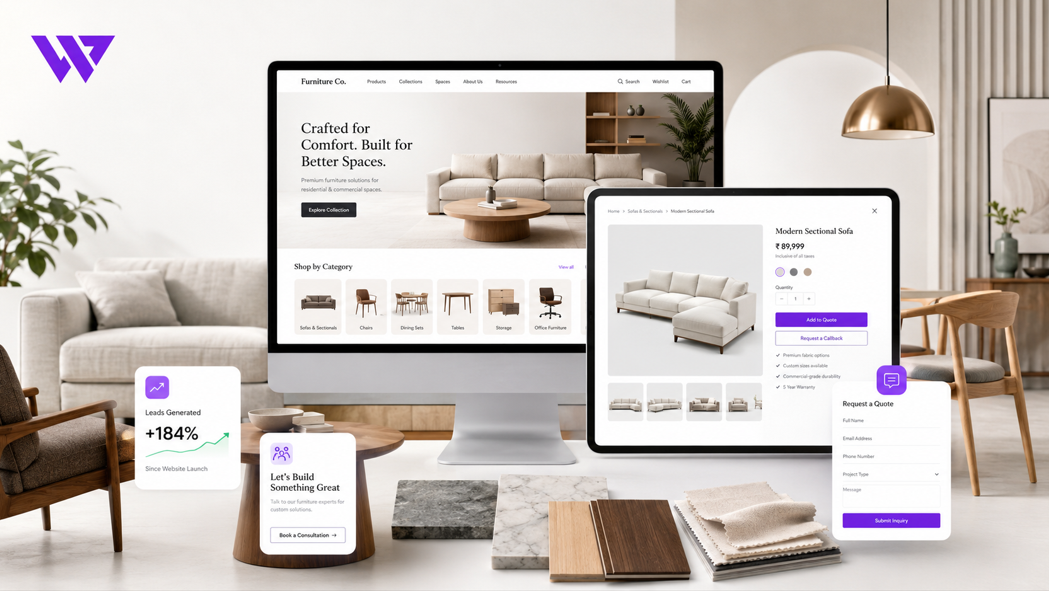
Webnion planned a responsive furniture website that transformed the product catalog into a structured lead-generation platform.
The goal was to help visitors discover suitable furniture, understand product details, share project requirements, and contact the sales team through a clear inquiry journey.
2. The Business Challenge
Furniture is a high-consideration purchase.
Customers usually need more information before making a decision because furniture affects space, comfort, budget, and long-term use.
Potential buyers often wanted to know:
- What materials were used
- Whether different sizes were available
- Whether colors or fabrics could be changed
- What the exact dimensions were
- Whether delivery and installation were included
- Whether the furniture could be customized
- How long production would take
- Whether the item would fit their room
- What the estimated price was
- How to request a quotation
The business faced several common problems:
- Product photos were not organized properly
- Customers could not browse the full collection easily
- Important specifications were missing
- Social media inquiries often lacked useful details
- Staff repeatedly answered the same questions
- Custom furniture requests were difficult to manage
- Customers sent unclear screenshots instead of product references
- Pricing depended on size, material, and customization
- Mobile visitors struggled to browse large product collections
- The website did not have a focused lead-generation journey
The business needed a digital catalog that could educate customers and collect qualified inquiries.
3. Project Objectives
The project was planned around several important objectives:
- Present the furniture brand professionally
- Organize products into clear categories
- Make the catalog easier to browse
- Provide detailed product information
- Support residential and commercial buyers
- Collect structured quotation requests
- Simplify custom furniture inquiries
- Improve mobile product discovery
- Build trust through completed projects and customer proof
- Reduce repetitive questions
- Support WhatsApp and direct communication
- Create a scalable platform for future products
Every part of the website was designed to help visitors move from product discovery to a meaningful business inquiry.
4. Our Strategy
We planned the website around the way furniture customers make decisions.
The intended customer journey was:
Discover the furniture collection → Explore a category → Review product details → Understand available options → Submit room or project requirements → Request a quotation
Instead of treating the website as a simple image gallery, we structured it as a digital sales assistant.
The catalog helped customers understand the products, while inquiry forms and communication options helped the business collect actionable lead information.
This approach supported both ready-made furniture buyers and customers looking for customized solutions.
5. Organizing the Furniture Catalog
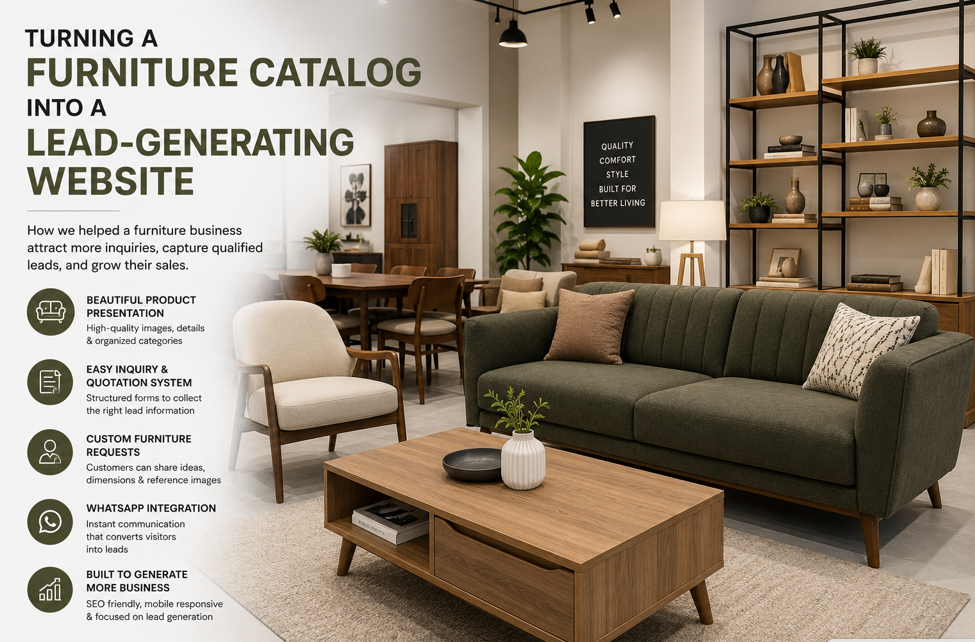
The furniture collection was divided into clear product categories.
These could include:
- Living room furniture
- Bedroom furniture
- Dining furniture
- Office furniture
- Storage solutions
- Outdoor furniture
- Restaurant furniture
- Hotel furniture
- Customized furniture
- New collections
- Featured designs
Customers could enter the category most relevant to their needs without scrolling through an unorganized list of products.
The structured catalog also made it easier for the business to add new collections in the future.
6. Shopping by Room
Many customers think about furniture based on the room they are planning rather than the product name.
The website could therefore allow visitors to browse by room:
- Living room
- Bedroom
- Dining room
- Home office
- Reception area
- Meeting room
- Restaurant
- Hotel room
- Outdoor space
This created a more natural discovery journey.
A customer furnishing a bedroom could explore beds, wardrobes, bedside tables, dressing tables, and storage products within one relevant collection.
7. Residential and Commercial Furniture Journeys
Residential and commercial customers often have different requirements.
Residential customers may focus on:
- Style
- Comfort
- Available space
- Color
- Fabric
- Storage
- Budget
Commercial clients may focus on:
- Quantity
- Durability
- Brand consistency
- Project timeline
- Installation
- Bulk pricing
- Custom dimensions
The website could provide separate paths for:
- Home furniture buyers
- Office projects
- Restaurants and cafés
- Hotels and resorts
- Interior designers
- Property developers
- Corporate procurement teams
This helped the business receive more relevant and better-qualified inquiries.
8. Professional Product Photography
Furniture customers need to understand design, size, texture, and finishing before contacting the business.
The product presentation could include:
- Front product view
- Side and back views
- Close-up material details
- Fabric or wood texture
- Product shown inside a room
- Storage and functional features
- Color variations
- Scale comparison
- Installation examples
- Short product videos
Lifestyle images helped customers imagine how the furniture might look in a real space.
Close-up images supported confidence around materials and craftsmanship.
9. Clear Product Information
Each product page was structured to answer important questions before the customer submitted an inquiry.
Product information could include:
- Product name
- Product category
- Dimensions
- Main material
- Frame material
- Fabric or surface finish
- Available colors
- Storage features
- Seating capacity
- Customization options
- Estimated production time
- Delivery and installation information
- Care instructions
This reduced repetitive questions and helped customers understand whether the product matched their requirements.
10. Product Dimensions and Space Planning
Furniture must fit the customer’s available space.
The website could display measurements such as:
- Width
- Height
- Depth
- Seating height
- Mattress size
- Table capacity
- Storage dimensions
- Required installation space
Visual measurement diagrams helped customers understand the product more clearly.
The website could also remind customers to measure doorways, staircases, lifts, and room dimensions before confirming an order.
Clear dimensions reduced the risk of unsuitable product inquiries and delivery problems.
11. Material and Finish Information
Material quality strongly influences furniture pricing and durability.
The product page could explain:
- Wood type
- Board type
- Metal structure
- Foam density
- Fabric type
- Leather type
- Surface finish
- Hardware
- Glass specification
- Care requirements
Where several options were available, customers could review the differences before requesting a quotation.
Transparent material information helped the business explain why similar-looking products might have different prices.
12. Color, Fabric, and Finish Options
Furniture customers may want a product to match an existing interior style.
The website could present available options through:
- Fabric swatches
- Wood finishes
- Metal colors
- Leather options
- Surface textures
- Stone or marble patterns
- Handle styles
- Cushion colors
Customers could select preferred options before starting an inquiry.
This gave the sales team useful context and reduced the need to ask the same basic questions manually.
13. Custom Furniture Requests
Some customers required products designed for a specific room, measurement, or style.
The website could provide a structured custom furniture request form.
The form could collect:
- Customer name
- Phone number
- Product type
- Required dimensions
- Preferred material
- Preferred color
- Quantity
- Budget range
- Delivery location
- Required date
- Reference images
- Additional requirements
Collecting these details at the beginning created a clearer project brief.
It also helped the business identify serious inquiries before preparing a quotation.
14. Reference Image and Floor Plan Uploads
Customers often find furniture inspiration on social media, Pinterest, interior design websites, or previous projects.
The inquiry form could allow visitors to upload:
- Reference product images
- Room photos
- Interior design inspiration
- Floor plans
- Measurement sketches
- Material references
- Color references
These files helped the furniture team understand the customer’s preferred direction.
The website also clarified that reference images represented inspiration and that the final design could depend on materials, dimensions, production methods, and budget.
15. Structured Quotation Requests
Furniture prices may vary according to:
- Product size
- Material
- Fabric
- Finish
- Quantity
- Customization
- Delivery location
- Installation requirements
- Production timeline
For this reason, some products were better suited to quotation-based selling than fixed-price checkout.
A quotation request could include:
- Selected product
- Preferred variation
- Quantity
- Measurements
- Delivery location
- Required date
- Customization notes
- Contact details
The sales team could then prepare a more accurate proposal based on the customer’s actual requirements.
16. Product-Specific Inquiry Actions
Each product page could include a focused inquiry button.
Instead of opening an empty message, the inquiry could automatically carry relevant details such as:
- Product name
- Product reference number
- Selected size
- Selected color
- Quantity
- Product page link
- Customer question
This helped the business identify the exact product immediately.
It also prevented confusion caused by unclear screenshots or incomplete product names.
17. WhatsApp Lead Generation
WhatsApp remained an important communication channel for furniture buyers.
The website could connect product pages with prepared WhatsApp messages.
For example:
Hello, I am interested in this furniture product.
Product: Modern Three-Seater Sofa
Preferred Color: Beige
Quantity: 1
Delivery Location: Dhaka
Product Link: [product page]
Please share the available options and quotation.
This allowed conversations to begin with useful information.
The website prepared the customer, while WhatsApp supported consultation and final negotiation.
18. Consultation Booking
Some customers needed help selecting furniture for a complete room or commercial project.
The website could allow visitors to request a consultation for:
- Home furniture planning
- Office setup
- Restaurant furniture
- Hotel projects
- Interior coordination
- Custom furniture
- Bulk purchasing
The consultation form could collect:
- Project type
- Property location
- Approximate area
- Required products
- Budget range
- Project deadline
- Preferred meeting time
This helped the team prepare before speaking with the potential client.
It also separated serious project inquiries from basic product questions.
19. Completed Project Portfolio
Furniture buyers want proof that a business can deliver the promised quality.
The website could present completed projects with:
- Project type
- Client sector
- Location
- Furniture supplied
- Materials used
- Project photos
- Installation images
- Design challenges
- Final solution
Residential and commercial project galleries helped new customers evaluate the company’s experience.
Real project images created stronger trust than generic promotional graphics.
20. Customer Reviews and Social Proof
Customer feedback could address concerns such as:
- Product quality
- Comfort
- Finishing
- Delivery experience
- Installation
- Customization
- Communication
- Project timeline
- Packaging
- After-sales support
The website could display:
- Written reviews
- Customer photos
- Video testimonials
- Social media comments
- Commercial client feedback
- Verified project reviews
Connecting proof to relevant products or project types made it more persuasive.
For example, an office furniture page could display feedback from previous office clients.
21. Trust-Building Business Information
The website needed to make the furniture business easy to verify.
Trust-building information could include:
- Business name
- Showroom address
- Factory or workshop information
- Contact number
- Business hours
- Delivery coverage
- Service areas
- Social media profiles
- Warranty policy
- Return or replacement conditions
- Installation process
- Customer-support information
A professional product catalog without clear business information may still fail to generate confident inquiries.
Transparency supported stronger lead quality.
22. Warranty and After-Sales Support
Furniture customers often want to know what support is available after delivery.
The website could explain:
- Warranty period
- What the warranty covers
- What is excluded
- Repair support
- Installation support
- Replacement conditions
- Maintenance guidance
- Customer complaint process
Different products could have different warranty terms.
These conditions needed to be communicated clearly before the order was confirmed.
23. Delivery and Installation Information
Large furniture requires a more detailed delivery process than ordinary products.
The website could explain:
- Delivery coverage
- Delivery charge
- Estimated delivery time
- Floor or lift requirements
- Assembly services
- Installation charges
- Site-access requirements
- Product inspection
- Damage-reporting process
Customers could provide delivery information during the inquiry process.
This allowed the business to identify potential access or installation challenges before finalizing the quotation.
24. Mobile-Friendly Product Discovery
Many furniture customers discover products through Facebook, Instagram, Google search, and mobile advertisements.
The website was therefore planned for comfortable smartphone browsing.
Mobile visitors could:
- Browse furniture categories
- View product images
- Zoom into details
- Read dimensions
- Review materials
- Explore color options
- Upload reference images
- Request quotations
- Open WhatsApp
- Book consultations
Buttons, forms, filters, and galleries were designed to remain accessible on smaller screens.
The mobile experience allowed customers to complete a useful inquiry without requiring a desktop device.
25. Search and Filtering
A large furniture catalog becomes easier to use when customers can narrow the available options.
The website could support filters such as:
- Product category
- Room
- Style
- Material
- Color
- Size
- Seating capacity
- Price range
- Ready-made products
- Customizable products
- Residential furniture
- Commercial furniture
This helped customers reach relevant products more quickly.
Better filtering also improved lead quality because inquiries came from visitors who had already identified suitable options.
26. Local SEO Structure
Furniture businesses often depend on customers from specific cities or service areas.
The website structure could support search visibility through pages focused on:
- Furniture store in a target city
- Custom furniture services
- Office furniture supplier
- Home furniture showroom
- Restaurant furniture
- Hotel furniture
- Sofa manufacturer
- Bedroom furniture
- Furniture delivery and installation
Product categories, service pages, project content, and business information helped search engines understand what the company offered.
Local SEO does not guarantee rankings, but a well-structured website creates a stronger foundation for relevant search visibility.
27. SEO-Friendly Product and Category Content
Each category page could include useful content about:
- Product types
- Materials
- Available styles
- Customization
- Delivery
- Buying guidance
- Frequently asked questions
Product pages could use clear titles, descriptions, image alt text, and structured information.
The goal was to create helpful content for customers rather than repeating keywords unnaturally.
Useful content supported both product discovery and search relevance.
28. Lead Capture Forms
Not every visitor was ready to request a full quotation.
The website could provide shorter lead forms for:
- Requesting a callback
- Asking about availability
- Downloading a catalog
- Booking a showroom visit
- Requesting material samples
- Starting a custom project
Each form collected only the information required for that stage.
This reduced friction while giving the sales team a clear reason to follow up.
29. Downloadable Digital Catalog
Some customers, architects, interior designers, and commercial buyers may prefer to review a catalog offline.
The website could provide a downloadable catalog after collecting basic lead information such as:
- Name
- Phone number
- Email address
- Business type
- Product interest
This turned catalog downloads into potential sales leads.
The business could then follow up with visitors who showed interest in a particular collection.
30. Showroom Visit Booking
Furniture customers may want to inspect materials and products in person.
The website could support showroom visit requests.
The form could collect:
- Customer name
- Phone number
- Preferred date
- Preferred time
- Product interest
- Number of visitors
- Additional notes
This helped the showroom team prepare suitable products or samples before the customer arrived.
A scheduled visit could create a more focused sales conversation.
31. Lead Management
The business needed more than inquiry notifications.
A structured lead system could record:
- Customer information
- Product interest
- Inquiry source
- Budget
- Delivery location
- Required date
- Uploaded files
- Assigned sales representative
- Follow-up date
- Lead status
- Notes
Lead statuses could include:
- New inquiry
- Contacted
- Requirements collected
- Quotation sent
- Follow-up required
- Negotiation
- Confirmed
- Lost
- Completed
This helped the business prevent serious inquiries from being forgotten.
32. Sales Follow-Up Workflow
Furniture purchasing decisions may take time.
Customers may compare products, measure spaces, discuss budgets, or wait for construction work to finish.
The system could support follow-up reminders based on:
- Quotation date
- Required delivery date
- Customer response
- Project stage
- Product availability
- Sample request
- Showroom visit
A structured follow-up process helped the sales team remain organized without sending random or excessive messages.
33. Analytics and Lead Tracking
The website could track important customer actions such as:
- Category visits
- Product page views
- Search activity
- Filter use
- Catalog downloads
- Inquiry submissions
- WhatsApp clicks
- Consultation requests
- Showroom bookings
- Quotation requests
This data helped the business understand which products and collections generated the most interest.
Tracking supported better marketing decisions, but no unverified performance claims were made.
34. Design Approach
The visual direction focused on furniture quality, space, comfort, and professional credibility.
The design system included:
- Clean and spacious layouts
- Large product images
- Neutral color combinations
- Clear typography
- Organized product cards
- Visible specifications
- Consistent inquiry actions
- Responsive forms
- Trust-focused portfolio sections
- Mobile-friendly navigation
The design allowed the products and completed projects to remain the main visual focus.
The website felt professional without becoming difficult to use.
35. Key Features Delivered
The furniture lead-generation solution included:
- Responsive business website design
- Organized furniture catalog
- Room-based product discovery
- Residential and commercial sections
- Professional product galleries
- Dimensions and specification details
- Material and finish information
- Color and fabric options
- Custom furniture request forms
- Reference-image uploads
- Floor-plan uploads
- Product-specific inquiries
- Quotation requests
- WhatsApp lead generation
- Consultation booking
- Completed project portfolio
- Customer reviews
- Warranty and delivery information
- Mobile search and filtering
- Local SEO structure
- Downloadable catalogs
- Showroom visit booking
- Lead management
- Follow-up tracking
- Customer-action analytics
- Scalable catalog structure
Each feature was selected to improve product understanding, lead quality, sales follow-up, and customer confidence.
36. The Outcome
The completed solution transformed the furniture catalog into a more practical lead-generation platform.
Visitors could explore products, review specifications, understand materials, submit measurements, upload references, request quotations, and contact the sales team through a structured journey.
The business gained better information about customer requirements before beginning the sales conversation.
It also gained a stronger platform for showcasing completed projects, supporting local search visibility, and managing future product growth.
No unverified lead-growth, conversion, or revenue percentages are being claimed. However, the website directly addressed several barriers that previously made furniture inquiries incomplete and difficult to manage.
37. Business Value Created
The website helps the furniture business:
- Present the product catalog professionally
- Make furniture easier to discover
- Collect more useful inquiry details
- Reduce repetitive customer questions
- Support customized furniture requests
- Organize reference images and measurements
- Prepare more accurate quotations
- Generate residential and commercial leads
- Build trust through completed projects
- Support local SEO
- Improve mobile browsing
- Track inquiries and follow-ups
- Book showroom visits
- Promote future collections
- Build a scalable foundation for sales
The project demonstrates that a furniture website can do more than display products.
It can educate customers, qualify opportunities, and create a more organized path toward consultation and quotation.
38. Why This Project Matters
Furniture businesses often invest heavily in product design, photography, showrooms, and manufacturing but still depend on unstructured social media conversations for sales.
A customer may see one product post without understanding the complete collection, available materials, customization process, or delivery service.
A lead-generating furniture website connects:
- Product discovery
- Detailed specifications
- Customization
- Project proof
- Quotation requests
- WhatsApp communication
- Consultation
- Sales follow-up
The website becomes a digital showroom and a practical sales tool.
It helps visitors move from inspiration to a clear business inquiry.
39. Frequently Asked Questions
Can a furniture website generate leads without selling products directly online?
Yes. Product catalogs, quotation forms, consultation booking, WhatsApp actions, and showroom appointments can turn interested visitors into qualified leads.
Can customers request customized furniture?
Yes. A structured form can collect dimensions, materials, colors, budget, required date, and reference images.
Can the website display product dimensions?
Yes. Product pages can include width, height, depth, capacity, and visual measurement diagrams.
Can customers upload room photos or floor plans?
Yes. File uploads can help the furniture team understand space, style, and measurement requirements.
Can the website support both home and commercial furniture?
Yes. Separate sections can be created for residential, office, restaurant, hotel, and other commercial projects.
Can customers request a quotation for a specific product?
Yes. A product inquiry can include the product reference, selected options, quantity, location, and required date.
Can showroom visits be booked through the website?
Yes. Customers can submit their preferred date, time, and product interest before visiting.
Can the website help with local SEO?
Yes. Category pages, service-area content, project pages, business information, and technical optimization can create a stronger local search foundation.
Can the business track leads and follow-ups?
Yes. A lead-management system can record inquiry details, assigned staff, quotation status, and next follow-up date.
Is the website suitable for mobile customers?
Yes. Product galleries, filters, file uploads, inquiries, WhatsApp actions, and consultation forms can be optimized for smartphones.
40. Need a Lead-Generating Website for Your Furniture Business?
A furniture website should do more than display attractive product images.
It should help customers understand products, explore available options, share project requirements, and request the right solution.
Webnion designs and develops responsive, lead-focused websites for:
- Furniture brands
- Furniture manufacturers
- Home furniture stores
- Office furniture suppliers
- Interior businesses
- Restaurant furniture providers
- Hotel furniture companies
- Customized furniture workshops
We create digital platforms that combine professional catalogs, custom-order inquiries, quotation requests, project proof, and organized lead management.
Build a furniture website that turns product interest into meaningful sales conversations.